
Wine cooler repair · 6 min read
Sub-Zero Wine Cooler Repair in Santa Cruz: why a dual-zone column drifts warm
A Sub-Zero wine column has to hold two temperatures at once against the Monterey Bay air. The faults behind warm drift in Santa Cruz — sensors, fans, condensers and the sealed system — and when repair beats replacement.
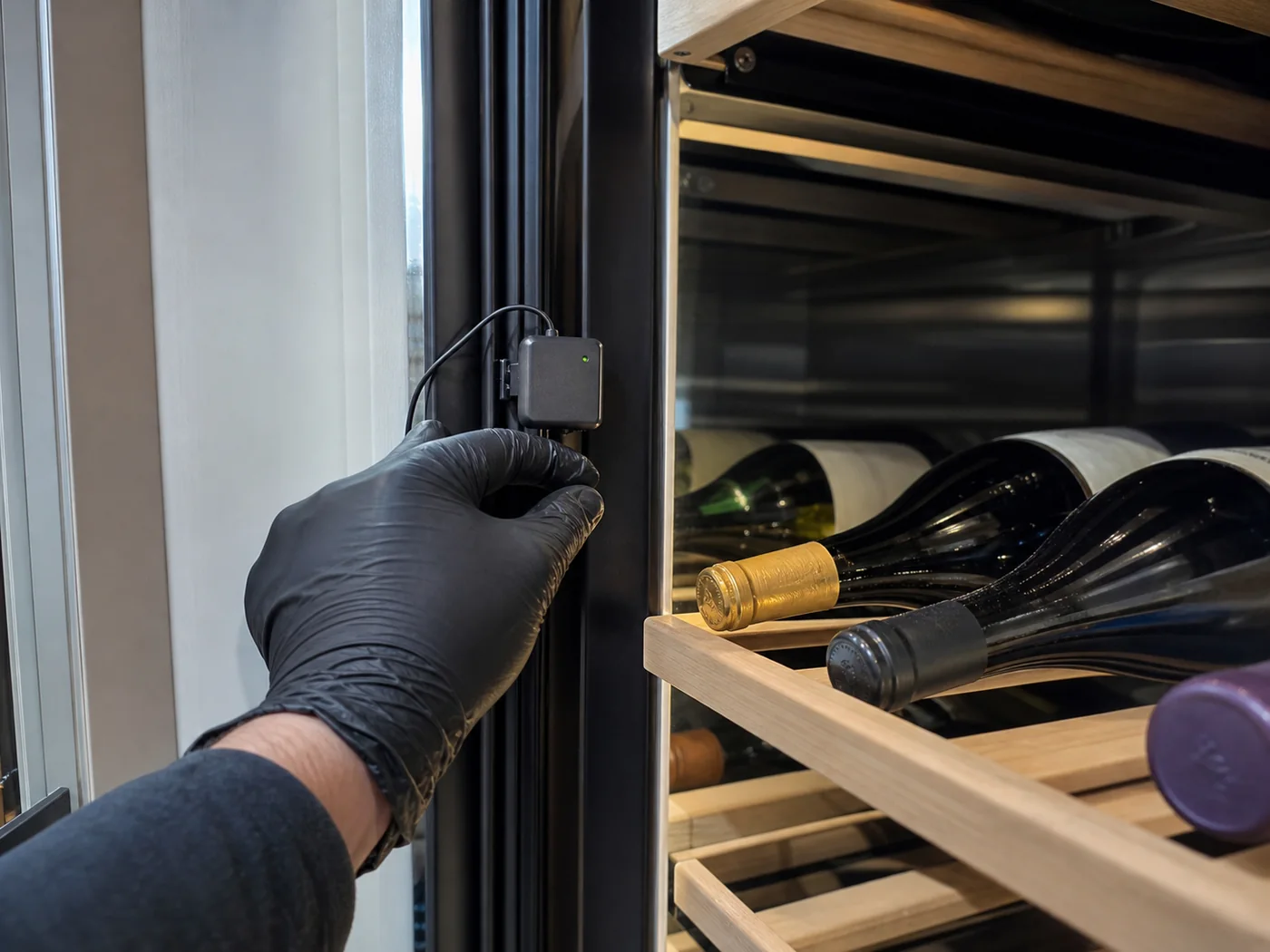
Most Santa Cruz wine-cooler calls start the same way: a collection that has been resting quietly behind UV glass suddenly reads a few degrees too warm, and the reds in the lower zone are the first to suffer. With a cellar tucked into the Santa Cruz Mountains practically over the hill — Bonny Doon, the ridgelines above Soquel and the estates near Pasatiempo — a lot of homes here treat that column as the back half of a working wine country, not a novelty.
A dual-zone Sub-Zero is a more demanding machine than a fridge: it splits one cabinet into two independently controlled bands so a crisp white and a cellared red can sit a dozen degrees apart. When one of those zones drifts, the cause is usually specific and fixable. Here is how a repair-minded diagnosis runs.
When one zone holds and the other wanders
The clue that narrows everything is whether both zones drift or only one. A dual-zone column runs two temperature sensors — one per band — feeding a control board that meters cold air between them with a damper and an evaporator fan. When a single sensor starts reading high, the board over-cools or under-cools just that zone while the other sits perfectly fine. That asymmetry is the signature of a failing zone sensor or a stuck damper, and it is one of the most common faults we trace on Santa Cruz wine units.
A fan is the other usual suspect. The evaporator fan moves chilled air across both compartments; when its bearing tires, airflow falls off and the zone farthest from the coil — typically the lower red side — warms first while the readout still claims everything is fine. We confirm it by reading actual air temperatures against the set points rather than trusting the front panel.
The coastal load on the condenser and seals
A wine column sheds its heat the same way a refrigerator does — by pulling room air across a condenser coil — and near the bay that air arrives damp and faintly salty. On the Westside, in Seabright and out toward Capitola, that means a coil loads up with film and grime faster than it would inland, the compressor runs longer to compensate, and the whole cabinet drifts a degree or two warm over a hot afternoon. A condenser clean is often the entire fix.
The seals matter just as much on a wine unit. The door gasket and the UV-glass seal keep the marine layer's humidity and warmth out; when a gasket stiffens through a wet Santa Cruz winter, warm damp air leaks in at the door line, the compressor fights it, and you may see condensation on the inside of the glass. A flashlight test in a dark kitchen will usually reveal a gasket that has stopped sealing before it costs you a sealed-system call.
Vibration, the sealed system, and the repair-or-replace line
Wine has one need a fridge doesn't: stillness. A worn fan bearing or a compressor mount that has loosened with age sends a faint, constant vibration into the racks, and over months that can disturb the sediment in older reds. So a buzz or hum that owners shrug off is worth chasing on a wine unit — it is often the same tired fan or mount that is also nudging the temperature off.
The expensive fault is a sealed-system one — a refrigerant leak or a failing compressor — and that is the only place the repair-or-replace question gets real. On a sound column the everyday parts (sensor, fan, damper, gasket, control board) are bounded, well-stocked repairs that are nearly always worth doing. When a sealed system is the cause we put gauges on it, show you the pressures, and weigh the cost against the unit's age and coastal history honestly. Booking is a single phone call to (669) 304-2562 — no form, no factory dispatch queue — and the $89 diagnostic goes toward the repair if you proceed.
FAQ
Questions & answers
Only the lower zone of my Sub-Zero wine column is warm — what's wrong?
A single warm zone usually points to that zone's temperature sensor, a stuck air damper, or a weak evaporator fan starving the far compartment of cold air — not the sealed system. We read actual air temperatures against the set points to confirm which one before recommending a repair.
Could a humming Sub-Zero wine unit be hurting my wine?
It can. A worn fan bearing or a loose compressor mount sends a steady vibration into the racks that disturbs sediment in older reds over time. That same fault often nudges the temperature off, so a persistent hum is worth diagnosing rather than ignoring.
Guides
More Santa Cruz guides
Sub-Zero Dual Refrigeration Explained: One Warm, One Cold in Santa Cruz
Why every Sub-Zero built-in runs two sealed systems, how to tell a single-circuit failure from a shared cause, and what repair costs in Santa Cruz.
Read the guide → Condensation vs Leak · 5 minSub-Zero Sweating or Leaking in Santa Cruz? Coastal Condensation vs a Real Leak
Sub-Zero sweating in Santa Cruz? Marine-layer condensation gets mistaken for a leak. Learn to tell coastal sweat from a real drain or water-line leak.
Read the guide → Seasonal guide · 6 minSalt air and the marine layer: a seasonal maintenance guide for coastal Santa Cruz
On the Westside, in Seabright and out at Pleasure Point, salt air and the Monterey Bay marine layer age a built-in differently. A season-by-season care guide for Santa Cruz kitchens.
Read the guide →