The ice-cream and thermometer test
Before booking anything, confirm the freezer really is failing. Soft, re-scoopable ice cream is a fast indicator, but a freezer thermometer is better: a healthy Sub-Zero freezer holds at or below 0°F. Two readings a few hours apart that sit above roughly 5°F to 10°F confirm a genuine hold-temperature problem rather than a door that was left open during a dinner party. Write both numbers down. We use exactly those readings to decide the first diagnostic branch, and we will leave a temperature log behind so you can watch the recovery after the repair.
Why foggy summers hit the freezer first
Counterintuitively, the heaviest season on a Santa Cruz condenser is not a heat wave — it is the long, damp, foggy stretches when the coil has to work hardest to reject heat in humid air. A condenser caked with household dust and the fine salt-laden grime that drifts in off the bay loses efficiency, and the freezer is the first compartment to suffer because it demands the coldest hold temperature. We pull the lower grille on nearly every not-freezing call and clean the condenser as a matter of course; on plenty of Westside and Seabright units, that alone brings the freezer back. It is also why the coastal maintenance routine pays for itself here.
When it really is the sealed system
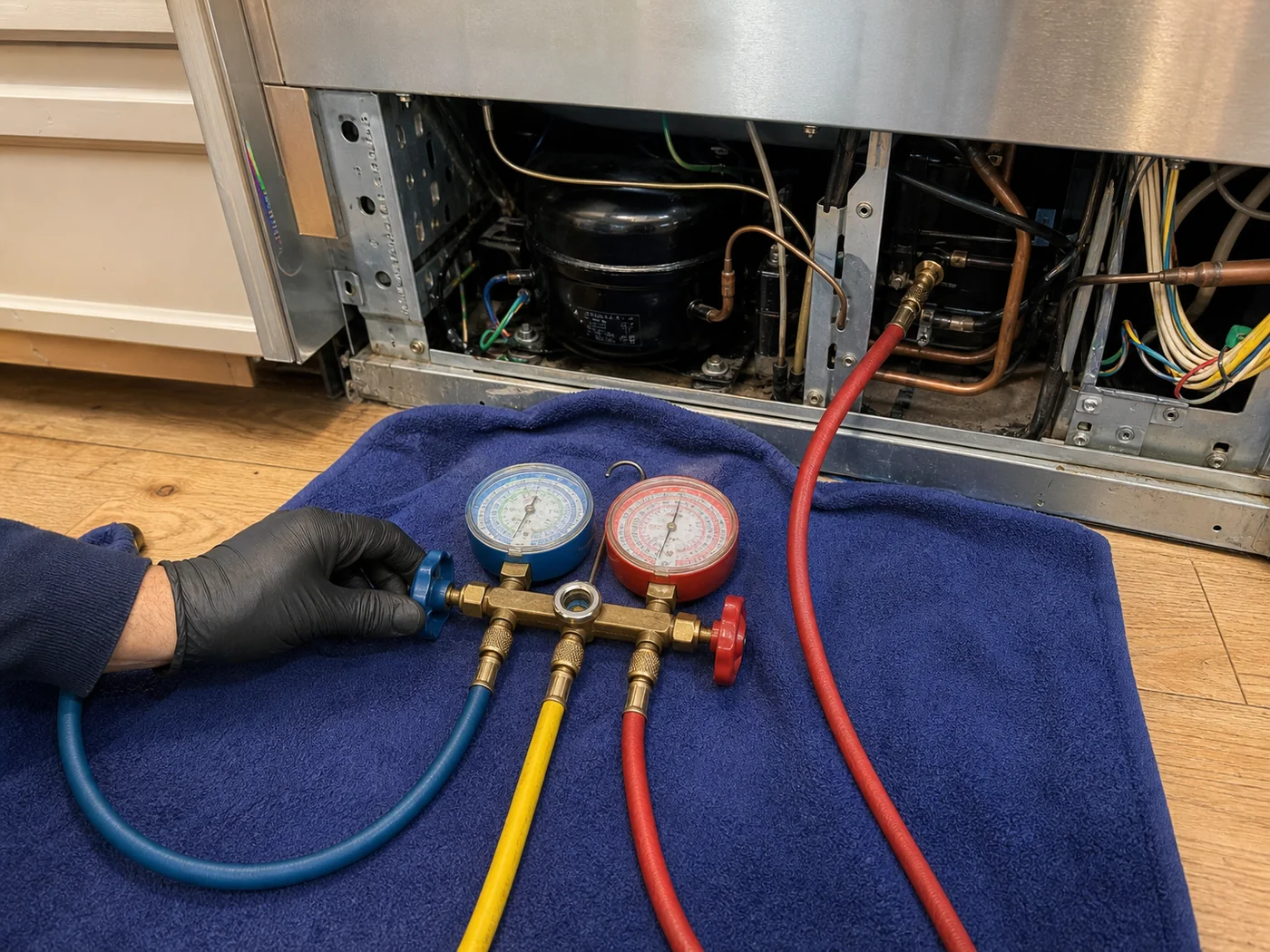
If both compartments are drifting warm, the fans spin, the condenser is clean, and the defrost system works, the diagnosis moves toward the sealed system. This is where an honest evidence-first approach matters most, because a compressor or refrigerant repair is a major expense and, on an older unit, may push the conversation toward replacement. We confirm it with measurements before quoting, and we will walk you through the repair-versus-replace math rather than just selling the part. For escalation specifics, the sealed-system and compressor page goes deeper. If the fresh-food side is the one failing instead, start with the not-cooling diagnostic.