Santa Cruz Sub-Zero Repair logo mark Santa Cruz Sub-Zero RepairSanta Cruz Coastal Sub-Zero Diagnostic Source 4.9/5 network rating278 verified Sub-Zero repairs

Symptom guide · Santa Cruz

Sub-Zero making noise in Santa Cruz

A new buzz, rattle, squeal, or loud hum from a Sub-Zero is easy to notice in a quiet coastal house — and the sound itself tells you a lot. Matching the noise to the part, and watching whether the temperature has changed with it, separates a harmless cycle sound from a fan or compressor that needs attention.

4.9/5 · 974 verified customer reviews

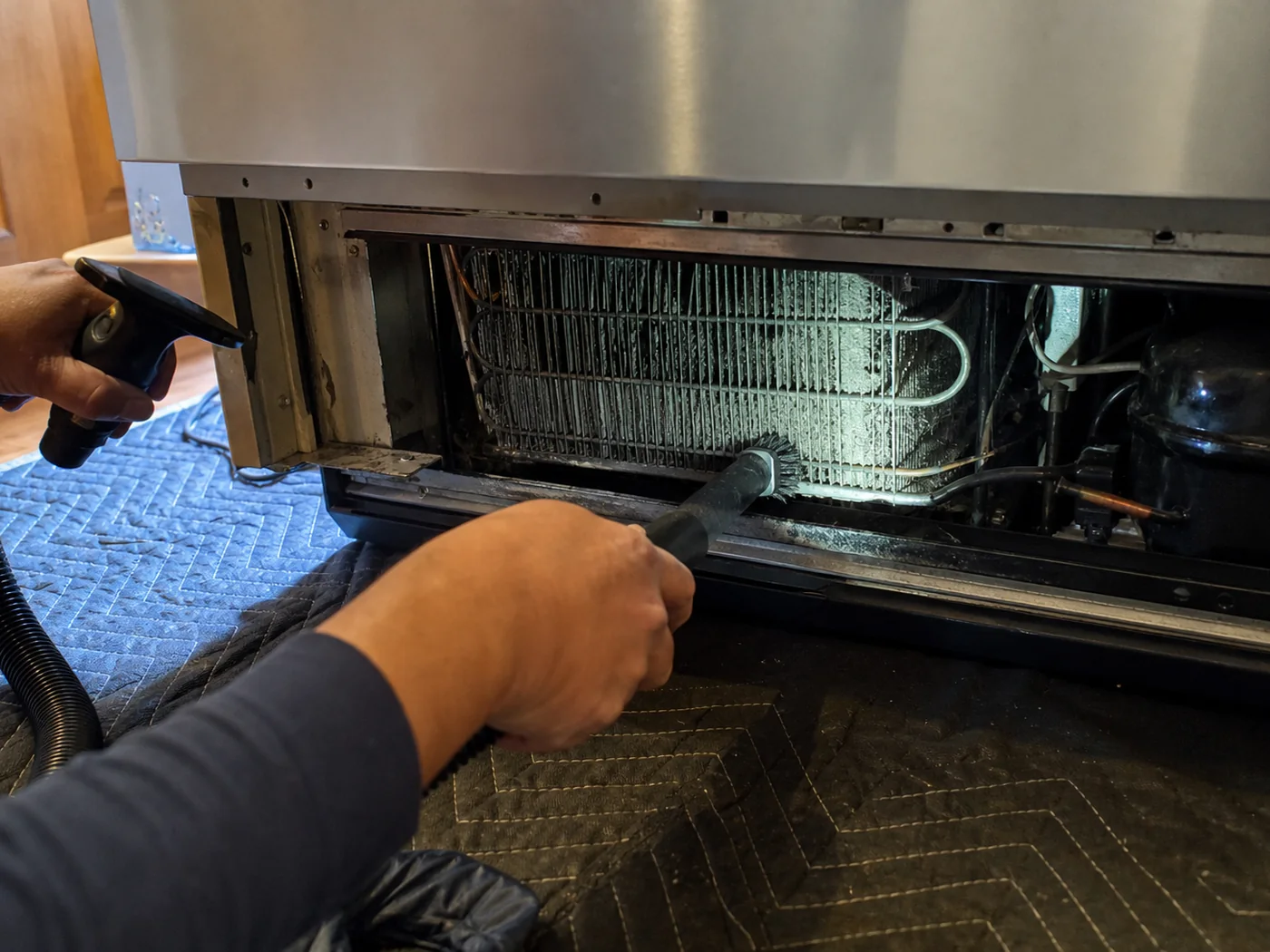
A Santa Cruz technician inspecting the condenser fan behind the lower grille of a noisy Sub-Zero refrigerator

Sub-Zero built-ins are engineered to run quietly, so a new sound stands out — and in a still Westside cottage or a Midtown bungalow off the San Lorenzo River, even a modest hum can feel loud at night. The good news is that refrigeration noise is one of the more diagnosable symptoms, because each moving part has a characteristic voice. A rattle is rarely the same culprit as a squeal, and a steady hum is rarely the same as a rapid click. Before assuming the worst, it helps to learn which sound you actually have and where it is coming from.

The second, equally important question is whether the noise comes alone or with a temperature change. A buzz with the freezer still rock-hard is usually a minor fan or leveling issue. The same buzz with a freezer that has started to soften is a different conversation. Pairing the sound with a thermometer reading is the fastest way to know how urgent the call is.

Sound-to-part map

What each Sub-Zero noise usually means

Rattle or clatter

Most often the condenser fan blade clipping dust and grime behind the lower grille, or a loose panel. On the coast the fine, salt-laden dust that settles on the coil builds up faster, so a rattle that appears after a season is frequently just a fan needing a clean and a true.

Squeal or whine

A high-pitched squeal usually points to a fan motor bearing — commonly the evaporator fan inside the freezer. Salt air accelerates bearing wear here, so a motor that ran silent for years can start to whine sooner than it would inland.

Buzz or vibration

A buzz you can feel on the counter is often a worn bearing, a blade touching something, or a unit that has drifted off level. On wine columns the vibration is sometimes felt more than heard and can stir sediment in the bottles.

Loud or laboring hum

A faint hum is just the compressor. A loud, straining hum — especially with a warming compartment or a compressor hot to the touch — can mean the compressor or its start components are failing and deserves a prompt look.

Clicking

Occasional clicks are the defrost timer or control switching, which is normal. Rapid, repeated clicking with no cooling can be a compressor relay or start device that cannot start the compressor — that one should not be ignored.

Ice-maker cycle noise

Periodic dropping, filling, and motor sounds from the ice maker are normal. A persistent grind or a fill that will not stop can indicate a jam or a valve issue rather than ordinary cycling.

Harmless cycle sounds versus real warnings

It is worth saying plainly: a healthy Sub-Zero is not silent. It hums softly as the compressor runs, gurgles as refrigerant moves, clicks as the defrost cycle switches, and whirs as fans circulate cold air. None of that needs a technician. What does need attention is a change — a new sound that was not there before, a sound that is getting louder, or any sound paired with a compartment drifting warm. The contrast is the signal. If you are not sure whether a noise is new, the leveling feet and a quick look behind the lower grille rule out the two most common, harmless causes in a few minutes.

Coastal wear and the quiet-house effect

Two Santa Cruz realities shape noise calls here. First, salt air. The marine environment accelerates corrosion and bearing wear on fan motors, so fans tend to get noisy a little sooner near the water than they would in a dry inland valley. Second, the quiet-house effect: Sub-Zeros live in calm, well-built kitchens in neighborhoods like Seabright, the Westside, and Scotts Valley, where there is little background noise to mask a new hum. A sound that would vanish in a busy household becomes impossible to ignore here, which is why we get plenty of calls about noises that turn out to be minor — and we would rather tell you it is minor than sell you a part you do not need.

When noise points at the compressor

The one noise that earns a faster appointment is a loud, laboring hum or rapid relay clicking combined with a compartment that is no longer holding temperature. That combination can mean the compressor or its start components are in trouble, and catching it early sometimes saves the compressor. We confirm it with electrical readings rather than guessing — the same evidence-first approach we use across the board. For the deeper escalation path, see the sealed-system and compressor page, and if the freezer has started to warm alongside the noise, the freezer-not-freezing guide is the right companion. Wine-column owners chasing a vibration may also want the wine storage temperature page.

Before you call

Six checks for a noisy Sub-Zero

  1. Locate where the sound comes from. Stand at the unit and find the source: the lower grille area (condenser fan and compressor), inside the freezer (evaporator fan), or up near the ice maker. Where the noise lives narrows the part list quickly.
  2. Describe the sound. Rattle, squeal, buzz, hum, or click each map to different parts. Note when it happens — constantly, only during a cycle, or only when a door opens — because timing is half the diagnosis.
  3. Check it is level and clear. Confirm the unit sits level and is not touching the cabinet, and that nothing in the bin or on top is rattling. A surprising number of new noises are a leveling foot or a vibrating panel.
  4. Pull the lower grille and look at the fan. A condenser fan blade clipping dust or grime is a frequent rattle source. Clear visible debris, but do not force a stiff blade — a dragging bearing needs a motor, not a push.
  5. Watch for a temperature change. Check the freezer and fridge temperatures. Noise on its own is often minor; noise plus a warming compartment moves it up the priority list and may point at the compressor.
  6. Record and book. Note the model and serial, when the sound started, and whether temperatures have shifted. A short phone video of the noise helps us arrive with the right part on the truck.

What a noise repair costs in Santa Cruz

Once the source is confirmed, a noisy fan motor, fan blade, or leveling correction typically runs $250 to $700, with a condenser cleaning that quiets a rattle at the low end. Compressor or start-component work is a separate, higher tier quoted only after electrical evidence. The $89 diagnostic is credited to the repair, and you will hear the price before any work begins. For the broader number picture see our Santa Cruz cost ranges, and if the unit is older and noise is one of several issues, the repair-or-replace breakdown can help you decide.

Verified noise repairs

What Santa Cruz customers say

A new rattle on our BI-48 was loud enough to hear from the living room — and in a quiet Midtown house that is saying something. It was the condenser fan blade catching on dust buildup. They cleaned it, trued the blade, and the kitchen went silent again.

Our wine column had picked up a low vibration that you could feel on the counter. The tech checked the fan bearing and the leveling feet, isolated the buzz, and explained which sounds were normal cycle noise. No upsell, just a clear answer.

Loud hum and the freezer slowly warming on an older built-in near the beach. That combination got them out fast, and it was the right call — the compressor was struggling. They walked me through the evidence before recommending anything.

FAQ

Sub-Zero noise questions

Which Sub-Zero noises are normal and which are warning signs?

A soft hum, occasional clicks as the defrost timer switches, gurgling refrigerant, and a fan whirr are all normal cycle sounds. Warning sounds are a loud or grinding rattle, a high-pitched squeal, a buzzing that vibrates the cabinet or counter, or a loud hum paired with a compartment warming up. The pairing of noise plus a temperature change is the clearest sign to act.

What makes a Sub-Zero buzz or vibrate?

A buzz or vibration is most often a fan motor with a worn bearing, a fan blade clipping debris, or the unit not sitting level so the cabinet resonates. On wine columns the vibration is sometimes felt more than heard. Salt air accelerates bearing wear here, so a fan that has run quietly for years can develop a buzz faster on the coast.

Why does my Sub-Zero click on and off?

Periodic clicking is usually the defrost timer or control cycling, which is normal. Rapid or repeated clicking with no cooling can be a compressor relay or start device struggling to start the compressor, which is not normal and should be checked before the compressor is damaged.

Is a loud humming Sub-Zero an emergency?

A faint hum is just the compressor running. A loud, laboring hum — especially with a warm freezer or fresh-food side, or a compressor that is hot to the touch — can mean the compressor or its start components are failing, and that is worth a prompt visit before it fails completely.

What does a noise repair cost in Santa Cruz?

A noisy fan motor, blade, or leveling fix typically runs about $250 to $700 once the source is confirmed; a condenser cleaning that quiets a rattle is at the low end. Compressor or start-component work is a separate, higher tier quoted only after evidence. The $89 diagnostic is applied to the repair.

Santa Cruz Sub-Zero Repair is an independent appliance repair company, not affiliated with, authorized by, or endorsed by Sub-Zero Group, Inc. Sub-Zero is a trademark of its owner, used only to identify the appliances we service.

Call (669) 304-2562 Book Online